Parish Records
The parish is the smallest unit of church authority in England and is distinct from a village / town; that is, parish boundaries do not necessarily neatly align with village boundaries. Parishes can cover a very large or very small area and depends more on the size of the population than physical size of a place. Towns and cities may be sub-divided into various parishes; Chichester for example has 12 ecclesiastical parishes.
Parish records are records generated by activities undertaken by the parish and are many and varied in scope. The parish gradually became responsible for managing various aspects of society – not just performing baptisms, marriages and burials – and, until the late 19th century, fulfilled many of the roles later performed by councils. Parish records can be used to glean information about local people, find out how they lived, what their life would have been like and what their society was like.
Parishes had responsibility for caring for old, poor, sick and orphans – those who could not work and could not support themselves. Rates to support them were set at vestry meetings and discussions conducted about individual cases. The burden on the Poor Rate was getting particularly problematical during the period after Waterloo, that is from 1815 to the 1830s and beyond, as rates of unemployment grew.
The idea emerged to offer payments by parishes to individuals and whole families, for travel and expenses to emigrate, so they would no longer be, actually or potentially, a burden on the Poor Rate. Vestry meeting minutes and papers provide invaluable examples of named emigrants, as well as information on emigration processes to America (and Canada) from various West Sussex parishes in the first half of the 19th century. Some examples from the parish records at West Sussex Record Office have been digitised for the American Collection; click on the images below to view the documents.
Aldingbourne
Par 1/30/1 lists 60 emigrants to America (1831-1835)

Ardingly

Par 231/37/1 gives details of the emigration of the Warriner (Warrener) family, 1825
Billingshurst
Par 21/12/4 and Par 21/12/5 show a general agreement to finance emigrants

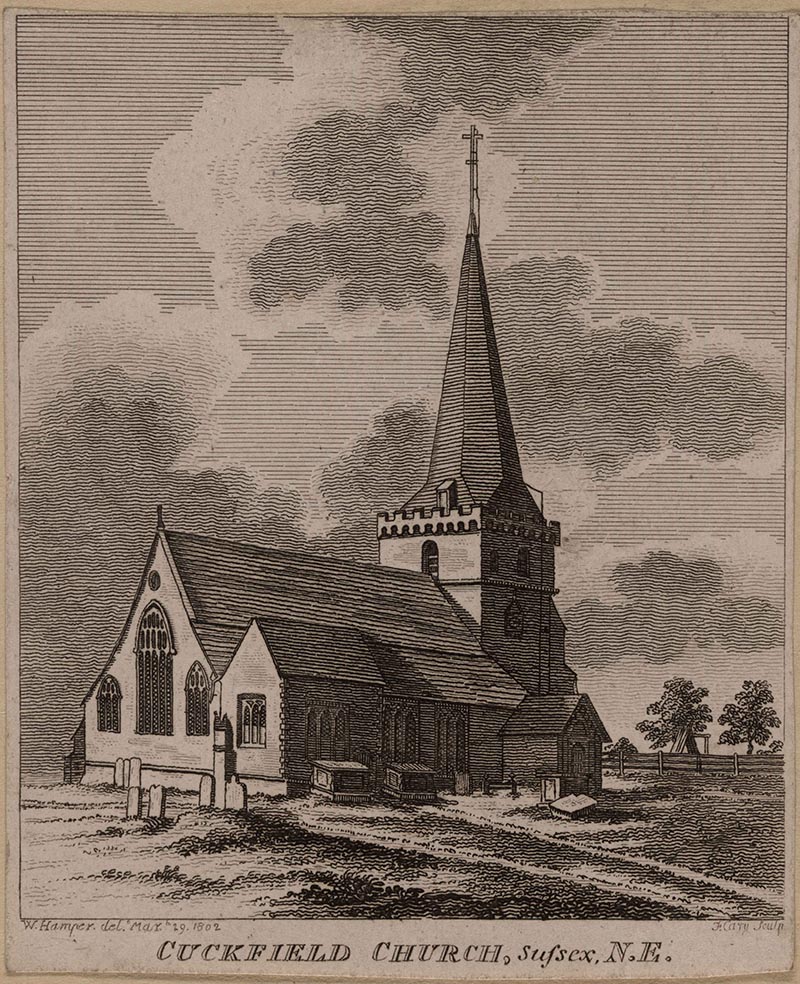
Cuckfield

Par 301/12/2 relates to the Baldwin family and their emigration in 1828
Par 301/12/3 shows the Poor Law Commissioners’ refusal to allow the poor rate to subsidize emigration, 1838-1848


Par 301/12/4 relates to the Lee family and their emigration in 1848
Lindfield
Par 416/37/5/14 gives details relating to the emigration of the Isted and Verrall families

South Bersted
Par 19/12/1 Vestry minute book relates to the emigration of the Goldring and Joyce families, 1835
West Grinstead
Par 95/12/1 shows various applications for financial assistance to emigrate, 1833


Par 95/38/7 relates to the Tourle family, and includes a poster encouraging emigration to West Virginia, 1849