Royal Sussex Regiment
The Origins of the Royal Sussex Regiment
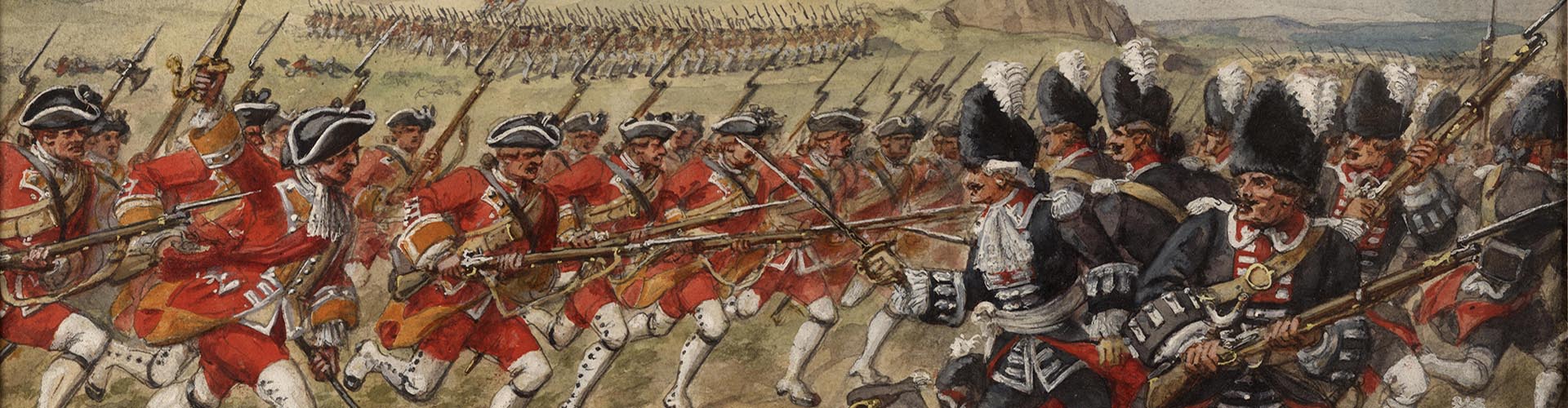
The Royal Sussex Regiment was originally raised in Belfast in 1701 as the Earl of Donegall’s Regiment and renamed the 35th Regiment of Foot from 1751, with the Sussex title evolving in the early 19th century. The Regiment participated in two significant wars in America in the 18th century.
Seven Years War (1756-63)
Global rivalry between Britain and France resulted in armed conflict in their North American territories. Each country allied with Native American tribes and vied for control of the region, resulting in several battles throughout the 18th century. The 35th Regiment were deployed to Albany, near New York, in June 1756 and then to Fort William Henry on the southern shore of Lake George beginning in March of 1757.
Under the command of Lt. Colonel George Monro, the 35th assisted in the defence of Fort William Henry when it was besieged in August 1757 by French and Native American forces under General Louis-Joseph de Montcalm. Outnumbered and outgunned by the attackers, Monro was eventually forced to surrender.

Montcalm granted surrender terms that included the soldiers keeping their belongings, apart from black powder, and safe passage of the remaining soldiers and camp followers to Fort Edward. Despite these generous terms, the refugee column was set upon by French allied Native Americans. These indigenous allies had been promised the “spoils of war” by Montcalm. Many British and Provincial troops were killed. Contemporary reports and modern estimates vary from 50 to 500, however the total number of deaths may never be known. The events at Fort William Henry were fictionalised in James Fenimore Cooper’s 1826 novel The Last of the Mohicans and later in some 10 films, the last being in 1992 with Daniel Day-Lewis.
View 3D images of objects relating to the 35th Regiment during the Seven Years’ War:
Musket balls recovered from Fort William Henry
Flints recovered from Fort William Henry, 1756
Clay pipe recovered from Fort William Henry, 1756
Brown Bess Land Pattern Musket (replica)
Records available for research at West Sussex Record Office:
American War of Independence (1775-83)
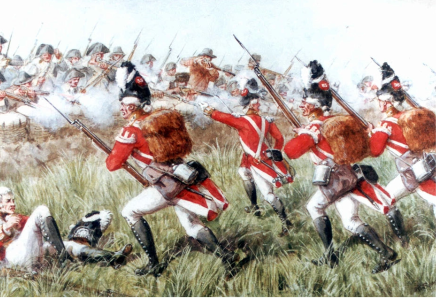
The 35th were deployed to Boston in April 1775. In June, under General Howe, they fought a battle with the colonists at nearby Bunker Hill, taking many casualties. Despite taking the Hill, the 35th suffered very significant casualties and only a handful of the Grenadier and Light companies were left unscathed. Deployed to New York in 1776, the 35th were involved in the battles of Long Island (Brooklyn) in August, Harlem Heights in September, and engagements at White Plains in October and Fort Washington in November which led to the British capture of the city. After further action in the Philadelphia Campaign of 1777, the Regiment eventually withdrew to the West Indies in 1778.
View 3D images of objects relating to the 35th Regiment during the American War of Independence: