The Death of Cecil Bisshopp
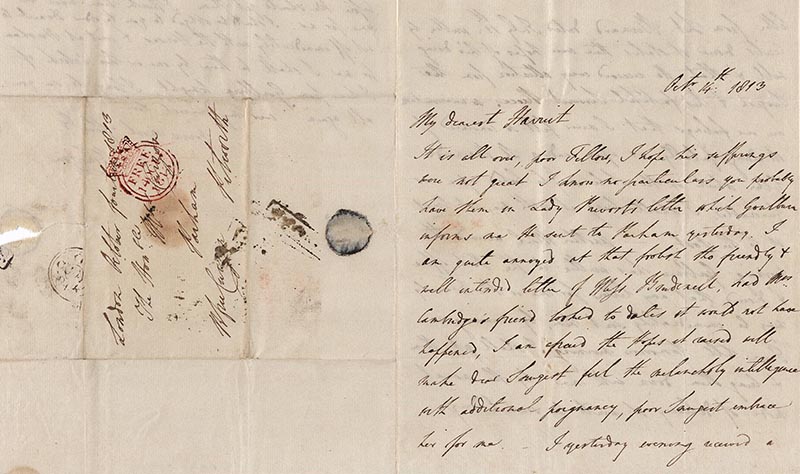
‘It is all over, poor Fellow. I hope his sufferings were not great.’
Robert Curzon to Harriett Anne Curzon, sister of Cecil Bisshopp, 14th October 1813
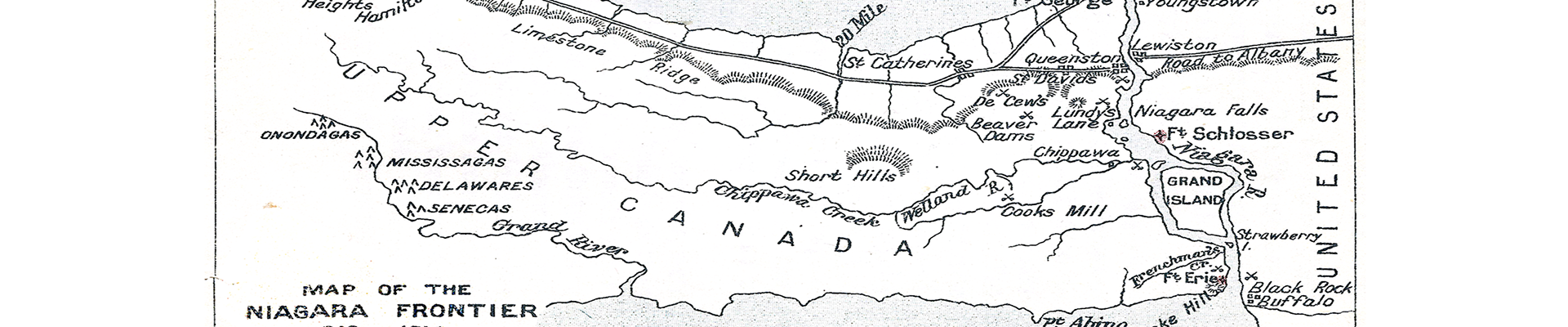
Early on the morning of 11th July, 1813, a group of around 250 British forces set out on a planned attack on an American camp at Black Rock in Buffalo, New York State, opposite the British Fort Erie on the other side of the Niagara River. Leading the troops was Lieutenant-Colonel Cecil Bisshopp.
The mission went according to plan, and by the afternoon the British force had succeeded in surprising their opponents and taking – and destroying – the Americans’ ‘Block House, Batteries and Barracks.’ Finding a significant quantity of much-needed provisions stored at the camp, the decision was taken to remain for a time at Black Rock in order to carry off as much as they could for the British troops’ use. They were confident that they had sufficient numbers to fend off any attack from returning American forces. In an unexpected turn of events, however, the troops were surprised by their enemy returning with reinforcements – a group of militia supported by Seneca warriors, who launched an attack on the British from the surrounding woods. Advancing to meet the American forces and guard the retreat of his forces by boat, Cecil was struck in his left thigh. As his men carried him towards the British boats to safety, he was then hit again in the left wrist and in the right arm near the shoulder once on board the boat.
His worst wound is in the left thigh, which I am sorry to say is broken…He has two other wounds, one high up in his right arm, and the other a little bit above the wrist in his left – neither of them however are likely to be of any consequence.
Cecil Bisshopp was carried to the boats by his men and returned to the British base at Chippawa, where he was tended to by Mr Hacket, a surgeon of the 8th Regiment. The news was first communicated to Cecil’s brother-in-law, Robert Curzon, in a letter of 12th July 1813, at Cecil’s request:
The Colonel conceived it better for me to write to you than to his father, to whom he wishes you to communicate the distressing intelligence…I have, by his desire, undertaken the unpleasant task of informing you that he is severely, though I am happy to be able to add not dangerously wounded…
As Surgeon Hackett himself recounted to Cecil’s father (Sir Cecil, the 8th Baronet Bisshopp), the wounds were not thought to be life-threatening despite some concern over the injury to his right arm – ‘the right arm suffered most…this was the only wound that excited in my breast any apprehension…yet I entertained the most sanguine hopes of being able, again to restore him to a profession to which he was much attached…as well as to his friends relatives & country…’
Yet within a couple of days Cecil Bisshopp’s condition deteriorated, and on 16th July, ‘…abt half past six o Clock in the even he expired, without a struggle, nay almost without a groan.’
There is an added poignancy in the communications to and between family members and acquaintances, which reflect the long and painful delays of sending news across the Atlantic in the early 19th century. Months pass before the news is finally confirmed, after fears and rumours are exchanged, first of his injury, then of his death.
Parham 2/3/2/22
This comprises a set of letters covering the circumstances and aftermath of Cecil Bisshopp’s untimely demise, and are available to view as digital images.