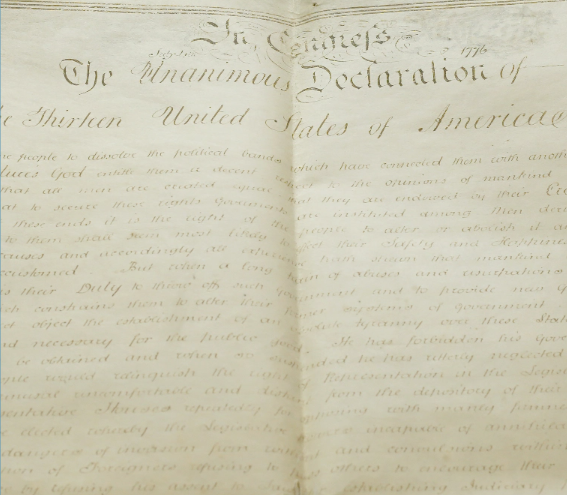
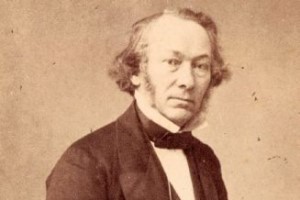
Cobden, America, and the Civil War
As for the struggle between North & South,- it seems after all to be drawing toward a civil war…I pray for a severance without bloodshed.
It is my habit when a war is going on to suspend a large map of the Country in my dining room for reference from day to day. I have before me an enormous one of the United States which tells me at a glance the stupendous task the North has undertaken in the attempt to force back the South into the Union.
Richard Cobden to John Bright, 25 March 1861; Richard Cobden to Samuel Lucas, 25 September 1861.
As both a long-term admirer of the United States, and a committed activist in the realm of international relations, Richard Cobden was deeply affected by the American Civil War, which raged throughout the last years of Cobden’s life. His correspondence during this time provides an immensely rich resource on matters relating to the conflict, giving particular insight into ‘The divisive impact of the American Civil War on British opinion’ and to the often tense diplomatic relations between Britain and the Union through much of this period.
References to the war are found throughout Cobden’s letters during the years 1861-1865, in addition to notes, papers and printed material which reflects his interest in the USA and the issues surrounding the war. Selected correspondence is currently available in digitised form on this site, whilst some material is available to view in person at West Sussex Record Office, or through other online sources. The Cobden Project at UEA may be of particular interest: Richard Cobden – Groups and Centres (uea.ac.uk)

Henry Ashworth (1794-1880)
One of Richard Cobden’s closest and longest standing friends. A leading Bolton cotton manufacturer, staunch Quaker and founding member of the Anti-Corn Law League, he had known Cobden since around 1837 and shared many of his political leanings. When it came to the American war, his instincts were more notably ‘pro-Southern’ than those of Cobden, but the two were united in their concerns over the Union blockade of the South and the impact on Britain’s cotton industry.
Cobden Mss 30/1 includes copy letters from Cobden to Ashworth, 1841-1865
Cobden Mss 104 also comprises copy letters from Cobden to Ashworth, 1860-1865 which cover the period of the American Civil War
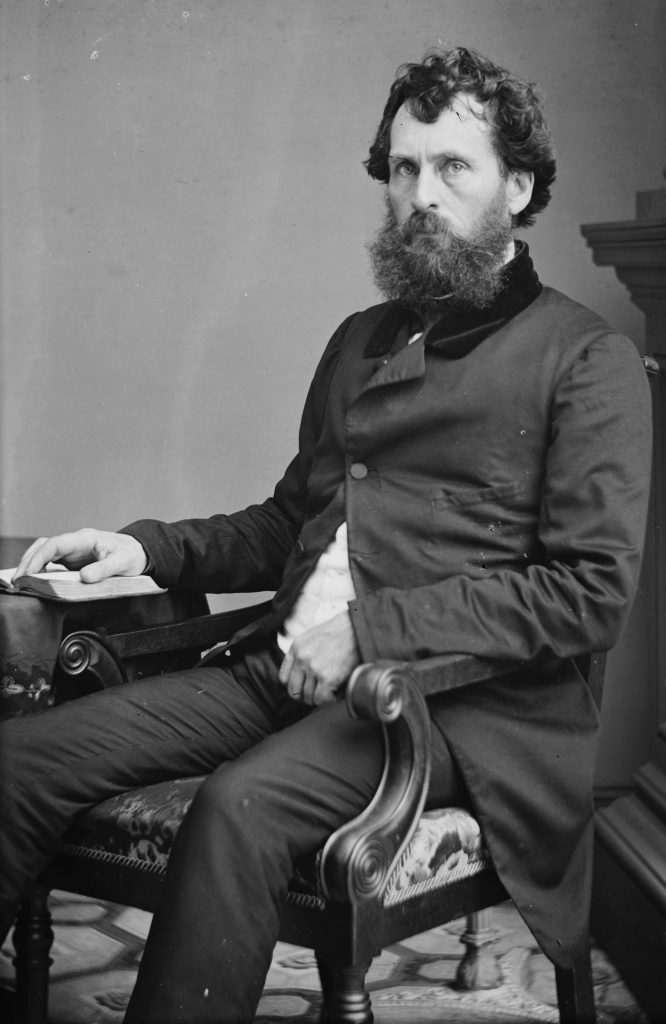
John Bigelow (1817-1911)
was an American lawyer and diplomat who served as American Consul in France from 1861. He had met Cobden during a trip to Europe some years earlier and they became friends.
Cobden Mss 120 includes 20 letters from Cobden to Bigelow, 1861-1863
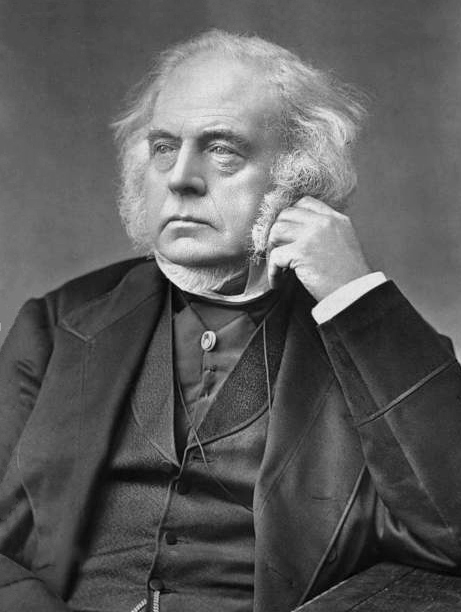
John Bright, MP
was another of the core members of the Anti-Corn Law League and a great friend and political collaborator of Cobden’s for close to 30 years. Their names were frequently linked together in political circles as they worked closely together on many reform issues. Like Cobden, he was greatly disturbed by the outbreak of the American Civil War, although the two did not take quite the same view on events, at least at the outset, with Bright firmly in support of the North, where Cobden favoured peace above all – even if this meant the North allowing the Confederate South to separate from the Union. Both Cobden and Bright, however, felt it their duty to use what influence they had to improve Anglo-American relations during the war, one notable example being in the Trent affair. They were both long-term ‘friends of America’, who often spoke out to facilitate greater co-operation between the two nations, and were revered by many in the United States.
Cobden Mss 68 includes copy letters from John Bright to Richard Cobden 1855-1862
Cobden Mss 69 includes copy letters from John Bright to Richard Cobden, 1841 & 1856-1865
Cobden Mss 72-76 are copy letters from Richard Cobden to John Bright, 1842-1865
Cobden Mss 77 includes two original letters from John Bright to C A Cobden, 1865 (enclosing extracts of letters to him from Charles Sumner, 1865), as well as two copies of a newspaper cutting about trees named after Bright and Cobden. Click on the image opposite to view a digital image.

Original letters from Cobden to Bright are held in the British Library: COBDEN PAPERS. Vols. III-VI. Original letters to John Bright, M.P.; 1837-1865. Four volumes. For the originals of Bright’s letters to Cobden see the Bright Papers, Vols. I, II (Add. MSS. 43383, 43384 above). Folio and quarto. – British Library (bl.uk)
Samuel Lucas – From 1859 Lucas was editor of the Morning Star, a radical newspaper founded by Cobden and John Bright. Cobden Mss 134-136 comprise copy letter books from Cobden to Lucas – click on the images below to view digital copies:


William Osborn was president of the Illinois Central Railroad, in which Cobden had invested a significant amount of stock in the 1850s. The two became good friends and corresponded on business and other matters, including the war, through the 1850s and 1860s. See correspondence with Osborn in our catalogue.
Charles Sumner – probably Cobden’s most important correspondent in relation to the war, Sumner was Senator for Massachusetts and Chair of the Senate Foreign Relations committee under Abraham Lincoln. To view letters from Charles Sumner see Letters from Charles Sumner to Richard Cobden.