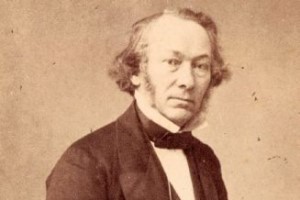
Charles Lennox, 3rd Duke of Richmond
I pass in the world for very obstinate, wrong-headed, and tenacious of my opinions
(3rd Duke of Richmond to Edmund Burke, 15 Nov 1772, The Radical Duke: Charles Lennox Third Duke of Richmond, Olson, Alison Gilbert, p. 12)
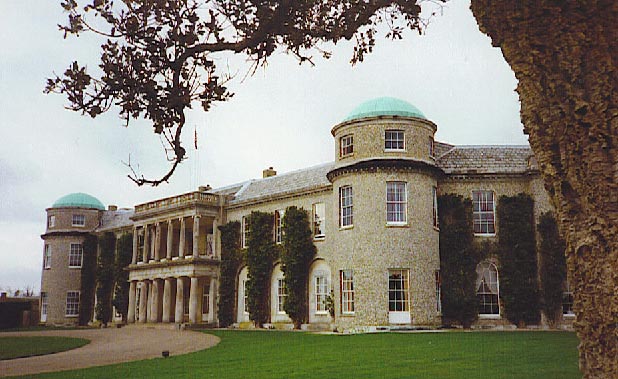
The Dukes of Richmond are an aristocratic family whose seat is at Goodwood House, approximately five miles outside Chichester. The current Dukes can trace their title back to 1675 when it was created by King Charles II for his illegitimate son, Charles Lennox, by his mistress, Louise de Penancoët de Kérouaille. The Dukes of Richmond have played a prominent role in both national and local affairs.
Image opposite: Goodwood House, Colin Smith, CC BY-SA 2.0 https://creativecommons.org/licenses/by-sa/2.0, via Wikimedia Commons
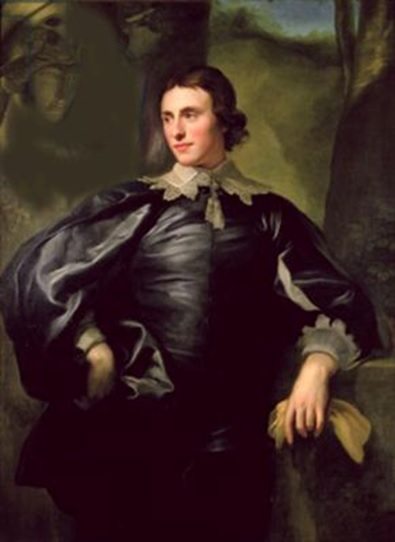
Born 22nd February 1735, Charles Lennox was the eldest son and heir of Charles Lennox, 2nd Duke of Richmond and his wife, Sarah Cadogan. He was educated at Westminster School and afterwards travelled the continent with his tutor, the biologist Abraham Trembley, spending some time studying at the University of Leiden. In 1750, when Lennox was just 15, his father died and he inherited the title of 3rd Duke of Richmond.
Richmond joined the army in 1752 and rose swiftly through the ranks. He was promoted to Major General during the Seven Years’ War (1756–1763), distinguishing himself in the Raid on Cherbourg in 1758 and the Battle of Minden in 1759 where he served as aide-de-camp to Prince Frederick of Brunswick.
Leaving active service in 1760, Richmond returned to England and entered politics. He was appointed as a Lord of the Bedchamber (a courtier in the Royal Household) in the same year but this was to be short-lived. Richmond resigned this post after just a month, an act which would permanently sour his relations with King George III.He became involved with the ‘Rockingham Whigs’, a faction of Whig politicians in the Commons and Lords led by Charles Watson-Wentworth, 2nd Marquess of Rockingham. Appointed British ambassador extraordinary in Paris in 1765, he was made a Privy Counsellor in the same year. In 1766 he served briefly as Secretary of State for the Southern Department with responsibility for Ireland, the Channel Islands, France Spain, Portugal, Switzerland, the states of Italy and the Ottoman Empire. Significantly in this role he was also responsible for the American colonies.
The Radical Duke: the 3rd Duke of Richmond and the American Revolutionary War
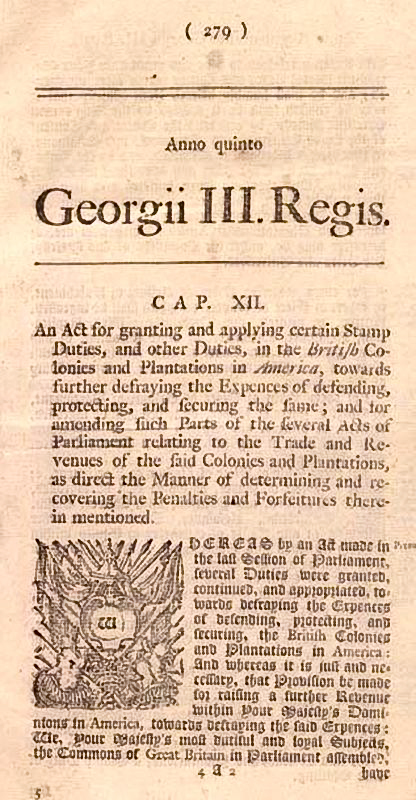
In 1765 the British government passed the Stamp Act which imposed taxes on the British colonies in North America. It required that printed materials, such as legal documents, newspapers, and even items such as playing cards, be produced on stamped paper made in London. It was a deeply unpopular act and prompted protests from the American colonists who objected to being taxed by the British government when they were not represented in Parliament. Their rallying cry was ‘No taxation without representation’.
Under pressure, Parliament repealed the Stamp Act in 1766 but at the same time passed another act, known as the Declaratory Act. The act stated that Parliament:
had hath, and of right ought to have, full power and authority to make laws and statutes of sufficient force and validity to bind the colonies and people of America … in all cases whatsoever.
Effectively it gave Parliament the power to make laws and changes to the colonial government even though the American colonists were still not represented in Parliament.
Whilst the 3rd Duke of Richmond had supported the Declaratory Act when it was passed in 1766, as tensions rose between Britain and the American colonies in the 1770s he became an outspoken critic of it. In 1777 he wrote to Rockingham that:
I cannot feel easy till I have voted for a Repeal of the declaratory act…long ago my own feelings and the bad use that has been made of that act have convinced me that it is indefensible
(The Radical Duke: Charles Lennox Third Duke of Richmond, Olson, Alison Gilbert, p. 37)
His opposition to the Declaratory Act solidified into support for the idea of American independence, particularly after France entered the war in 1778. Richmond argued that Britain should give up the American colonies in order to focus its efforts against France, writing:
This Event [the Franco-American Treaty of Alliance of May 1778] makes it the more necessary to come out with the Proposition of declaring the Independency of America. This being done instantly, and publickly, declaring against a War with France notwithstanding this Treaty, is the only means to keep America from joining with France as allies. It is the only Chance we have for preventing such a Measure which must be our Ruin.
(The Radical Duke: Charles Lennox Third Duke of Richmond, Olson, Alison Gilbert, p. 37)
He initiated a debate in 1778 calling for the removal of British troops from America; whilst responding to this motion Pitt the Elder (at that point the Earl of Chatham) dramatically collapsed, dying a few weeks later.
Throughout the American Revolutionary War Richmond was a relentless critic of the government’s management of the war effort which made him few friends. The press, referring to his French ancestry, characterised him as a traitor whilst in 1781 his criticism of Lord Rawdon’s role in the execution of the South Carolina militia leader Isaac Hayne almost led to a duel. One Parliamentary colleague, Charles Jenkinson, described him as a ‘plagueing fellow’.
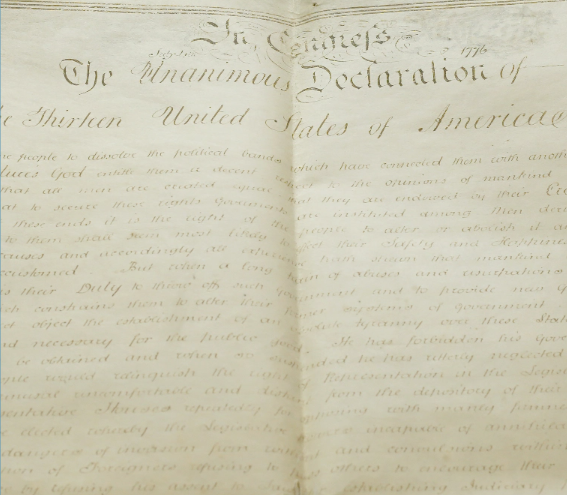
Richmond’s support for American independence, amongst other evidence, has suggested that he may have owned The Sussex Declaration at one point.